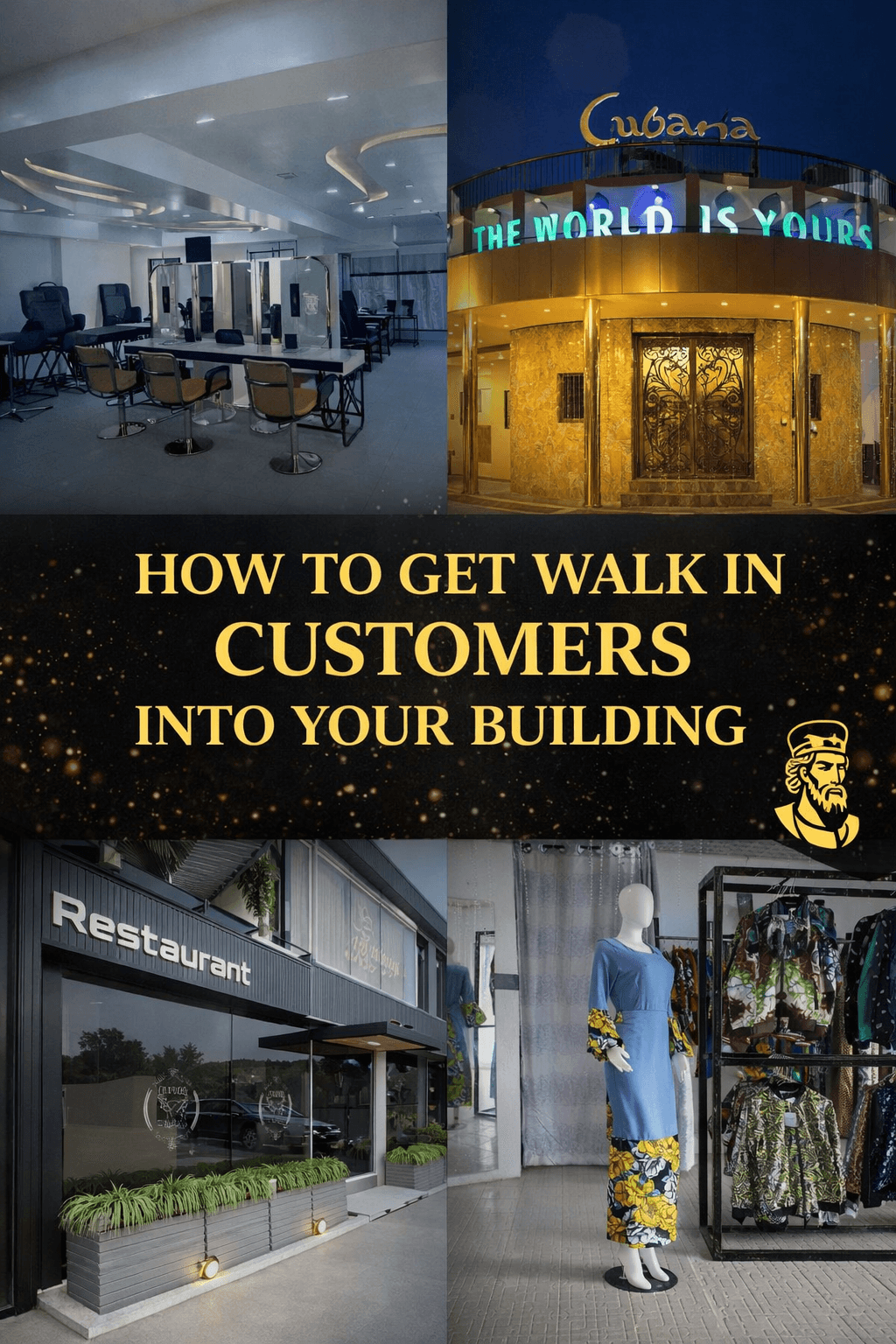
Not all businesses are meant to live online. Some function better as a Product Is the Building.
Some businesses are not downloadable. They are not scalable through clicks alone. They are buildings.
Examples are:
• Nightclubs
• Restaurants
• Saloons
• Fashion houses and so on
Their value exists in a physical space, at a specific location, during a specific moment in time.
Yet, many of these businesses are marketed as if digital presence alone is enough.
Beautiful Instagram pages. High-end photos. Moody lighting. Curated brand language.
And still the building remains empty sometimes.
This case study explores why being digital doesn't matter for walk-in businesses unless it is translated properly, and how micro-influencing helps to bridge the trust, pricing, and expectation gap that prevents people from physically walking into your building.
PART 1: THE WALK-IN BUSINESS PROBLEM NOBODY TALKS ABOUT
VISIBILITY DOES NOT EQUAL ENTRY
Many physical businesses believe their biggest problem is visibility.
"If we were on the road, people would come."
But this assumption is flawed.
In cities like Lagos and Abuja, people see many businesses on the road, they know about them, but they never step into them.
Why?
Because knowing a place exists is not the same as knowing:
• If it's affordable
• If it's welcoming
• If it's "for people like me"
• If I'll be embarrassed when I arrive
• If I'll be judged, bounced, or overcharged
For walk-in businesses, the biggest barrier is psychological, not informational.
THE FEAR OF WALKING IN
There is something called "The Fear of Walking In".
Let's be honest. Walking into a physical space requires courage.
Unlike clicking a link, at a walk-in:
• You can be seen
• You can be judged
• You can be priced out
• You can feel out of place
This is especially true for:
• High-end restaurants
• Premium fashion houses
• Nightclubs
• Salons with luxury branding
When pricing is unclear, people assume the worst.
"That place looks expensive."
"I don't think that's for people like me."
"I don't want to go there and look stupid."
And so they stay away.
PART 2: WHEN DIGITAL BRANDING BECOMES A BARRIER - OVER-PACKAGING!!!
Many walk-in businesses over-brand themselves into intimidation.
• High-production photos
• Minimal captions
• No price references
• No real customer voices
This creates:
• Mystery
• Aspirational value
• But also exclusion
Fashion houses are a perfect example.
You see:
• Beautiful designs
• Well-dressed models
• Perfect lighting
But you don't know:
• If a dress costs ₦50,000 or ₦500,000
• If they welcome walk-ins
• If fittings are by appointment only
So you don't go.
Not because you don't like it — but because you don't understand it.
SILENCE AROUND PRICING
There's Silence Around Pricing. Same thing for nightlife and hospitality.
One may argue that silence pricing eliminates those you don't want and brings in those you want, however;
If I don't know:
• What a bottle of Hennessy costs
• What the minimum spend is
• Whether there's an entrance fee
I cannot plan.
And if I cannot plan, I will not show up.
People do not like surprises when money is involved.
PART 3: WHY TRADITIONAL DIGITAL MARKETING FAILS WALK-IN BUSINESSES
SOCIAL MEDIA IS NOW SEEN AS A WINDOW, NOT A DOOR
The pages of these businesses, their Instagram, X and TikTok show atmosphere, not accessibility.
They show:
• The best nights
• The most attractive people
• The loudest moments
They do not show:
• Average nights
• Normal customers
• Real spending behavior
This creates a false reality that intimidates rather than invites.
This is where micro-influencers come in. They bring their true experiences. They tell a story!!!
PAID ADS DON'T BUILD TRUST FOR PHYSICAL SPACES
Because Paid Ads Don't Build Trust for Physical Spaces.
Paid ads only:
• Increase awareness
• Drive curiosity
But they cannot answer the questions that matter most:
• "Is this place for me?"
• "Can I afford this?"
• "What actually happens when I get there?"
Ads talk at people. Micro-influencers talk with people.
PART 4: ENTER THE MICRO-INFLUENCER, THE TRUST TRANSLATOR
WHAT MICRO-INFLUENCERS ACTUALLY DO
Micro-influencers do not just promote. They interpret.
They translate:
• Brand language into human language
• Ambience into experience
• Price ambiguity into clarity
They answer the unspoken questions.
This is why Micro-influencers work for walk in businesses and succeed because:
• They look like normal people
• They live where their audience lives
• They go where their audience goes
• They speak honestly
When a micro-influencer says: "I went here with ₦30,000 and had a great night."
That sentence alone removes fear.
PART 5: LET'S ANALYSE A CASE STUDY FOR A WALK-IN BRAND
This case study combines insights from:
• Nightclubs
• Restaurants
• Salons
• Fashion houses
All operating in major Nigerian cities.
The challenge was consistent:
• Strong branding
• Good service
• Poor walk-in conversion
People admired the brand online but hesitated offline.
THE TURNING POINT: UNDERSTANDING REAL CUSTOMER QUESTIONS
But There's The Turning Point. You Must Understand the Real Customer Questions.
Before using micro-influencers, the business assumed customers cared about:
• Aesthetic
• Prestige
• Brand image
But customer interviews revealed different concerns:
• "How much will I spend?"
• "What kind of people go there?"
• "Will I feel comfortable?"
• "Is it worth the money?"
These questions were not being answered anywhere.
WITH THE HELP OF MICRO-INFLUENCERS, USED STRATEGICALLY, THESE QUESTIONS WERE ANSWERED
STEP 1: NICHE INFLUENCER SELECTION
Instead of large influencers, the business partnered with:
• Lifestyle creators in Lagos & Abuja
• Food reviewers
• Nightlife vloggers
• Beauty and grooming creators
Follower count mattered less than:
• Location
• Engagement
• Audience similarity
STEP 2: EXPERIENCE-BASED CONTENT, NOT ADS
Influencers were invited to:
• Visit the building
• Pay for some services themselves
• Document the real experience
They were encouraged to show:
• Entry process
• Menu prices
• Bottle prices
• Haircut prices
• Waiting times
• Staff interaction
This transparency was intentional.
STEP 3: PRICING TRANSPARENCY WITHOUT BRAND DAMAGE
Instead of hiding prices, influencers openly said:
• "A bottle of Hennessy here is around ₦120k."
• "Haircuts start from ₦8,000."
• "You can come here with ₦20k and still enjoy yourself."
This did not cheapen the brand. It qualified the audience.
People who could afford it came confidently. People who couldn't stopped guessing.
REDUCED INTIMIDATION THROUGH FAMILIAR FACES
"If They Can Go, I Can Go"
This is the most powerful psychological shift micro-influencers create.
When someone sees:
• A familiar accent
• A familiar lifestyle
• A relatable budget
They stop seeing the building as elite and start seeing it as accessible.
REMOVES THE FEAR OF EMBARRASSMENT
This Removes the Fear of Embarrassment.
Micro-influencers show:
• What to wear
• When to go
• Where to sit
• How ordering works
This removes social anxiety. People don't fear the unknown anymore.
Especially when that influencer is a local influencer from your city.
LOCAL TRUST MATTERS
People trust someone who:
• Lives in their city
• Deals with the same prices
• Understands local culture
When an influencer says: "If you're in Lagos this weekend…"
That is a call to action, not content.
KNOWING WHAT TO EXPECT WHEN YOU VISIT A CITY
For travelers:
• "What's the vibe in Abuja?"
• "Where do people actually go in Lagos?"
Micro-influencers become informal guides.
They reduce friction for visitors who don't want to gamble with their time or money.
RESULTS
And so what this brings is Results.
The business observed:
• More first-time visitors
• Better-prepared customers
• Fewer price disputes
• Higher customer satisfaction
People arrived knowing:
• What they wanted
• What they would spend
• What experience to expect
BETTER CUSTOMER-BRAND ALIGNMENT
Also, Better Customer-Brand Alignment.
Not everyone came, and that was a good thing.
The customers who came:
• Were the right audience
• Stayed longer
• Returned more often
Micro-influencers filtered the crowd naturally.
BETTER THAN CELEBRITY ENDORSEMENTS
And yes this works Better Than Celebrity Endorsements because Celebrities Create Aspiration, Not Assurance.
Celebrity endorsements:
• Look impressive
• Create hype
But they don't answer practical questions.
Micro-influencers create:
• Comfort
• Clarity
• Confidence
For walk-in businesses, confidence matters more than clout.
SCALE CAREFULLY WITHOUT BREAKING THE EXPERIENCE
In conclusion, Scale Carefully Without Breaking the Experience.
Because growth was steady:
• Staff could adapt
• Service quality remained high
• Pricing structures were refined
The business avoided:
• Overcrowding
• Poor service
• Brand backlash
FINALLY, BUILDINGS NEED TRANSLATORS, NOT BILLBOARDS
Walk-in businesses do not fail because they lack digital presence.
They fail because:
• People don't know if they belong
• People don't know what it costs
• People don't know what will happen when they arrive
Micro-influencers solve this by doing what brands cannot do themselves:
• Speak plainly
• Show reality
• Remove fear
They turn buildings from intimidating monuments into welcoming experiences.
In cities like Lagos and Abuja — where culture, class, and perception strongly influence behavior — micro-influencers are not optional.
They are the bridge between seeing and stepping inside.
Back to Case Studies
Physical Businesses16 min read•January 25, 2024
Getting People Into Your Walk-In Store
For nightclubs, restaurants, salons, and fashion houses, being digital is not enough. The biggest barrier is psychological: people fear walking in.
Ready to Create Your Own Success Story?
Join thousands of brands and influencers achieving remarkable results through our platform.
Get Started Today